
Choosing the Right Industrial Crane for Your Business
In Singapore’s dynamic industrial landscape, efficient mechanical handling services are indispensable. Factories, work sites, warehouses, and essential infrastructural complexes, such as power stations, waterworks, hospitals, and telecommunications hubs, all rely heavily on robust lifting systems and material handling equipment.
For strict safety and operational reasons, any load heavier than 30 kilograms should be mechanically handled. Beyond regulatory compliance, operational efficiency and productivity are critical factors when planning your facility’s layout and equipment deployment.
As a leading industrial crane supplier in Singapore, Helmsion Engineering provides highly engineered lifting solutions tailored to your workflow. Understanding each crane type’s distinct characteristics, advantages, and suitability is essential for selecting the most appropriate solution for your tasks.
1. Core Types of Material Handling Equipment
Selecting the right industrial crane requires matching your material flow with the right mechanical footprint. Below are the primary material handling systems used across Singapore’s industrial sectors.
Electric Overhead Travelling Cranes (EOTC)
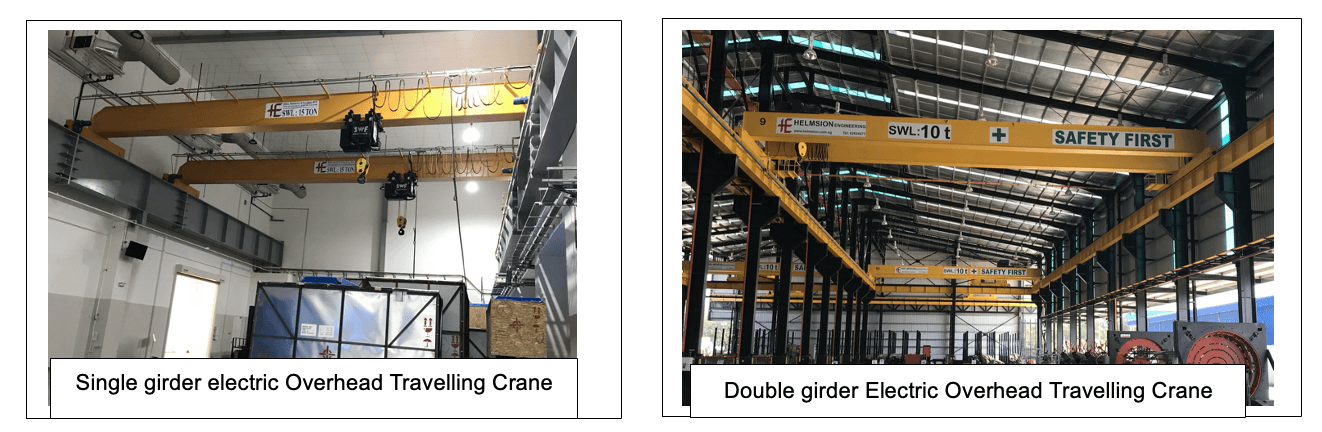
Also known as bridge cranes, EOTCs are prominent fixtures in industrial settings, renowned for their robustness and adaptability. These cranes feature an overhead configuration where a bridge spans the width of the facility and moves along elevated runways or tracks.
Advantages:
- High lifting capacity and extensive hook coverage for efficient material handling.
- Minimal floor space requirements, maximising usable area within the facility.
- Higher operational speeds for all travel movements.
- Suitable for indoor and outdoor applications, including warehouses, manufacturing, and infrastructural facilities.
Disadvantages:
- Significant initial investment and structural installation costs.
- Requires a dedicated elevated engineering structure (runway beams) to operate.
Best For: Loading and unloading heavy loads in processing plants, transporting warehouse inventory, and maintaining heavy plant machinery.
Explore our Overhead Travelling Cranes →
Gantry Cranes
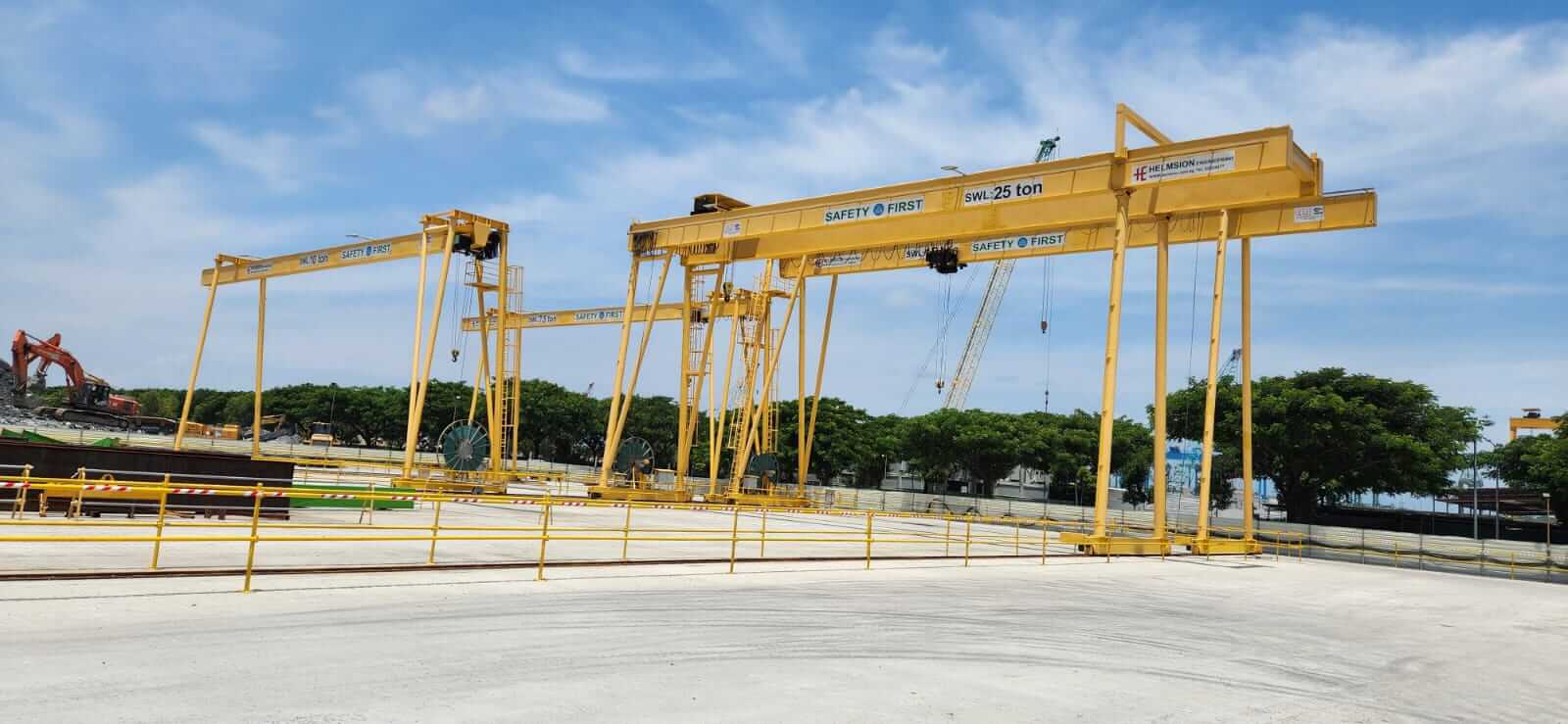
Gantry cranes are versatile lifting solutions characterised by a gantry structure supported by legs on wheels, moving along tracks or runway beams primarily at ground level.
Advantages:
- Eliminates the need for an elevated overhead runway structure when using ground rails.
- High mobility and flexibility for diverse indoor and outdoor environments.
- Wider hook coverage when configured with cantilevers on the main girder ends.
Disadvantages:
- Demands a dedicated ground-level foundation if the soil cannot support the required bearing pressure.
- Requires a marked, permanently cleared safety strip on the floor where the crane legs move to prevent workplace collisions.
Best For: Open factory yards, construction and fabrication sites, and marine ports where an overhead supporting structure cannot be erected.
Jib Cranes
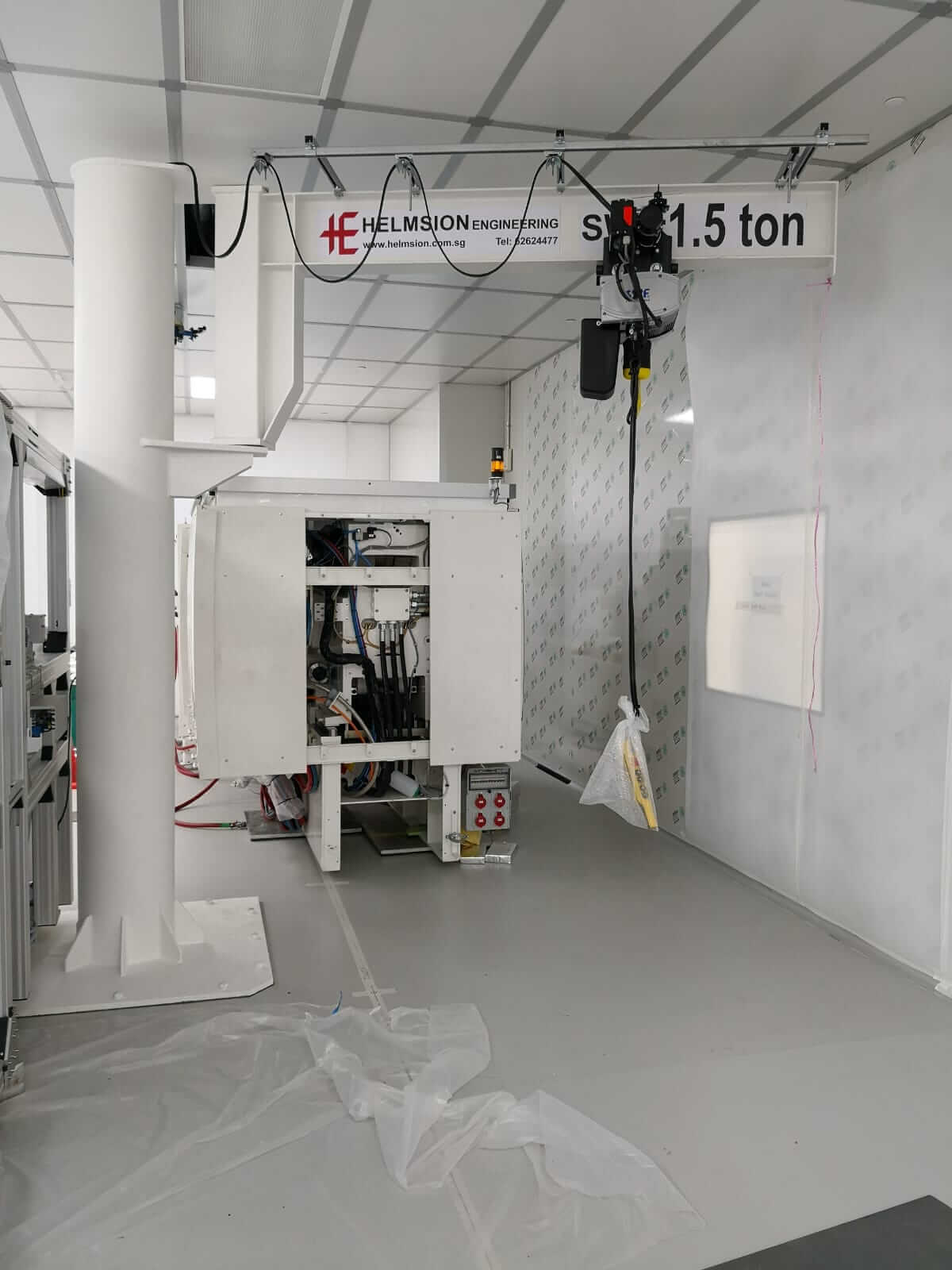
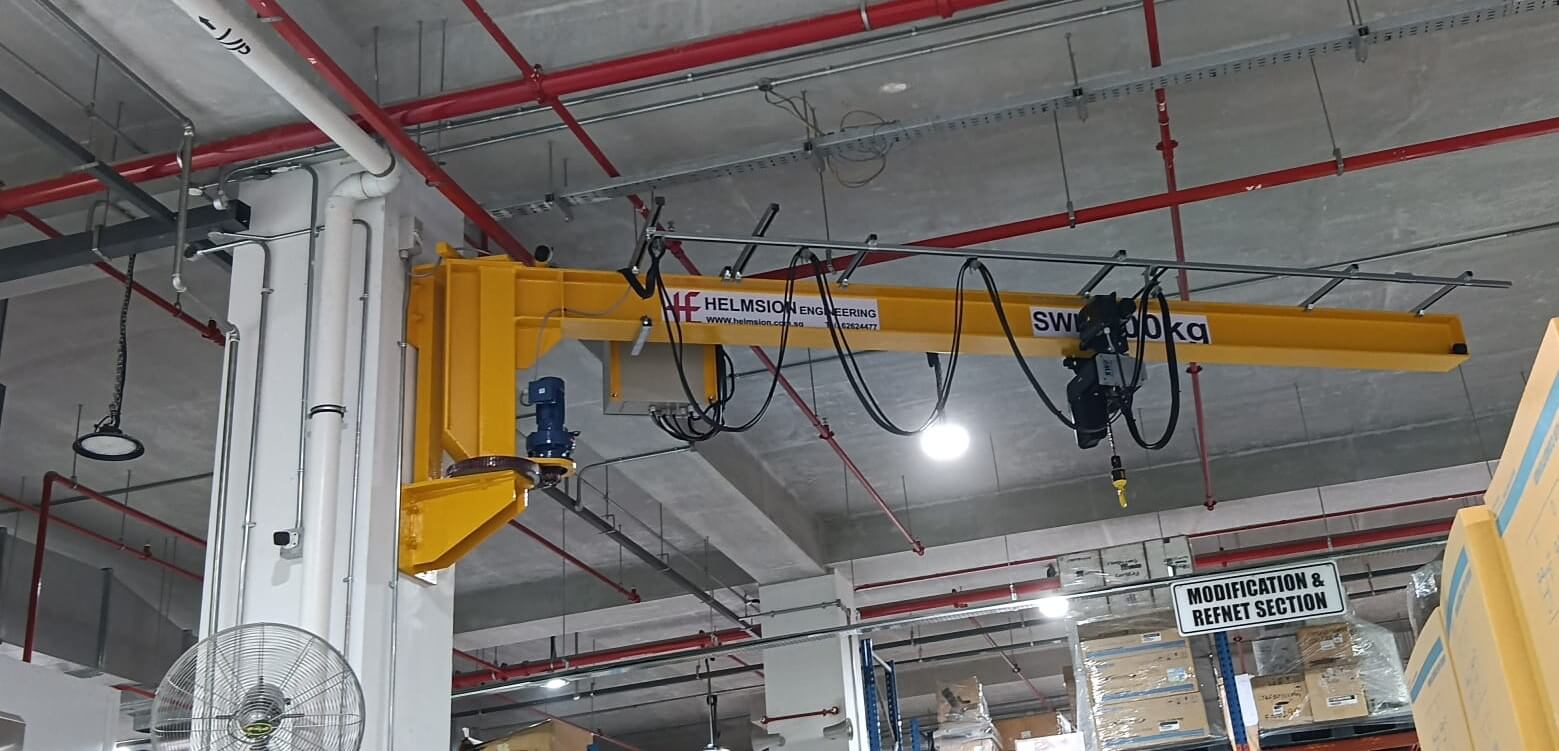
Characterised by a horizontal jib arm or boom, jib cranes excel at precise load positioning in confined areas where traditional, sweeping cranes are not feasible. They are commonly deployed in wall-mounted or pillar-mounted configurations.
Advantages:
- Relatively low initial purchase and installation costs.
- Compact design enables swift integration into tight spatial layouts.
- Highly optimised for handling heavy materials within a localised workstation.
Disadvantages:
- Limited horizontal reach and lower lifting capacities compared to bridge or gantry cranes.
- Lifting area is strictly confined to the rotational coverage of the jib arm.
- Requires robust foundation work or structural columns engineered to counter heavy turning moments.
Best For: Feeding production machinery, local manufacturing assembly lines, and dedicated maintenance repair bays.
Monorail Systems
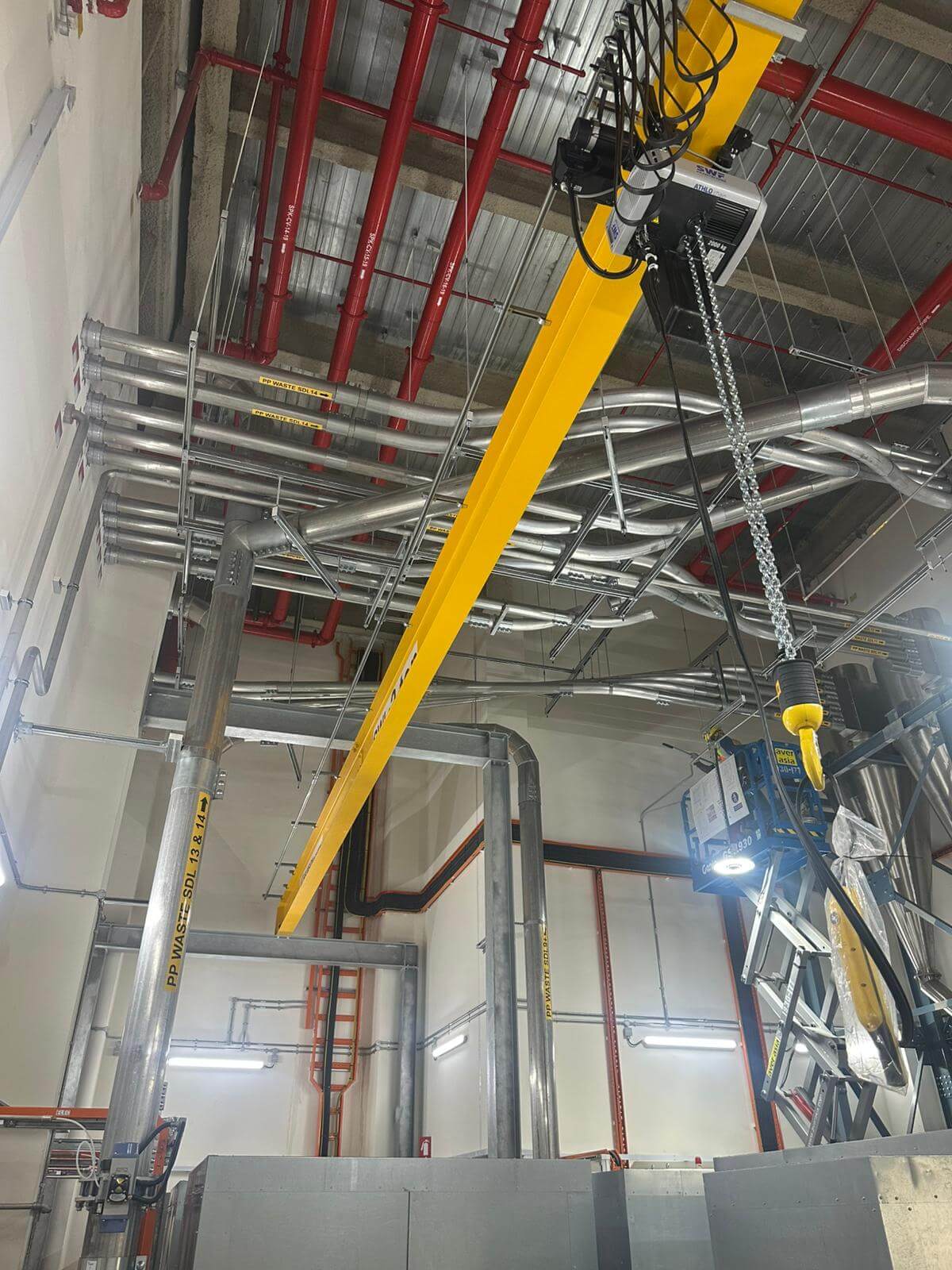
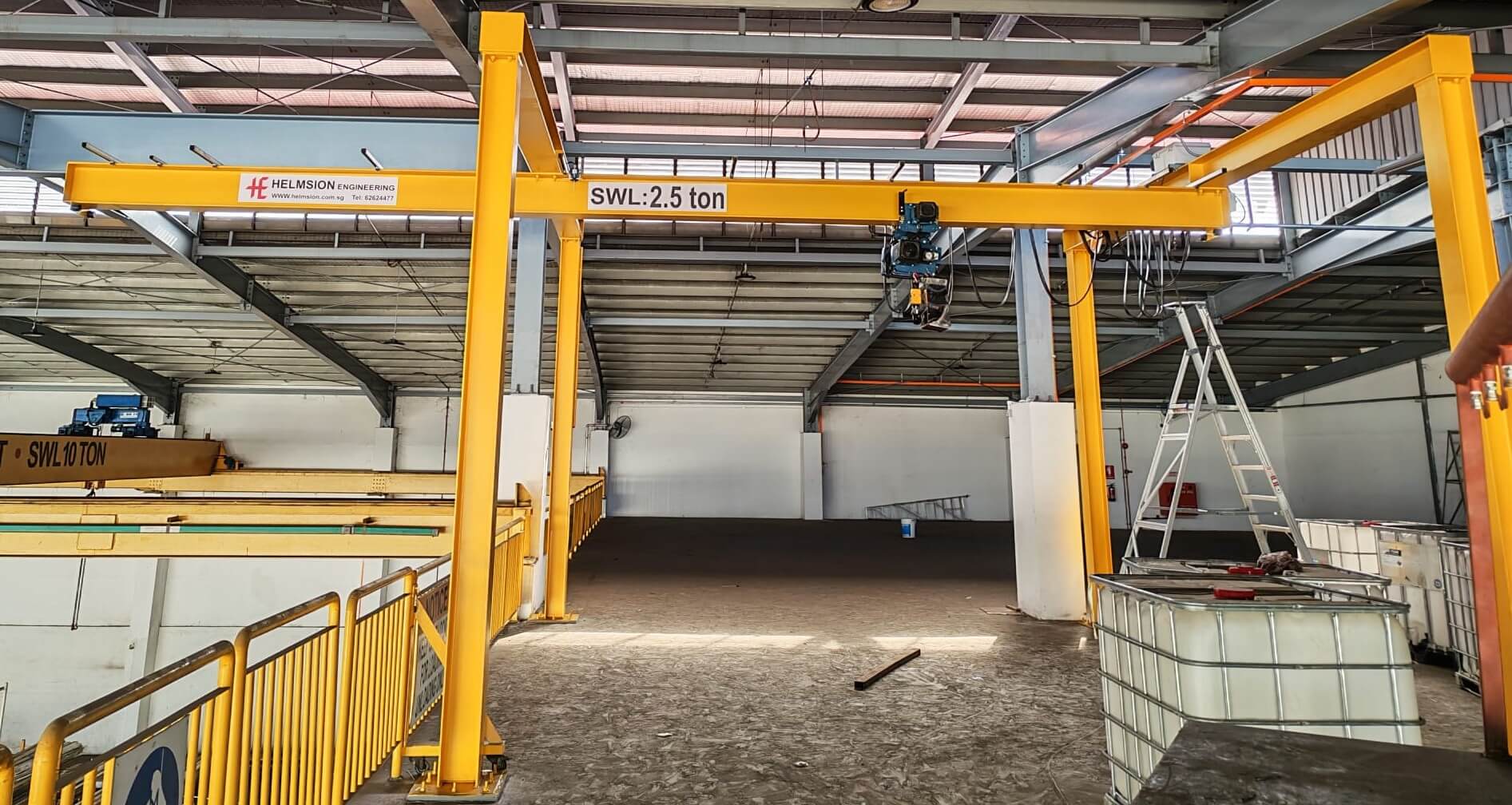
When a load needs to be lifted and moved to a fixed location along an unvarying, linear path, a monorail hoist is the most economical solution. It features two distinct axes of movement: vertical lifting (Z-axis) and linear horizontal travel (X-axis).
Advantages:
- Incredibly cost-effective lifting setup.
- Mechanical simplicity translates to very low maintenance requirements.
Disadvantages:
- Lifting coverage is strictly restricted to a single linear or curved track plane.
- Requires a strong overhead structural support beam to mount the monorail track.
Best For: Production lines or repetitive transfer routes where materials follow a strict, predictable path.
Explore our Hoists and Monorail Systems →
Transfer Vehicles & Goods-Hoists
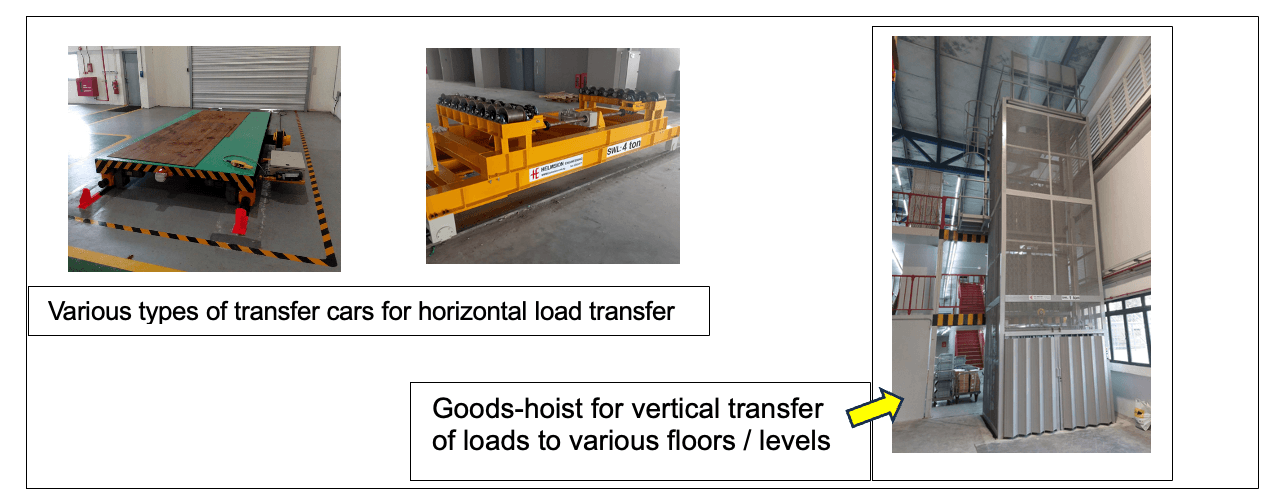
Shifting heavy loads between distinct factory bays often requires dedicated internal transporters rather than external transport vehicles. Floor-running transfer cars handle horizontal cross-bay movements, while heavy-duty goods-hoists manage safe vertical level transitions.
Explore our Related Material Handling Products →
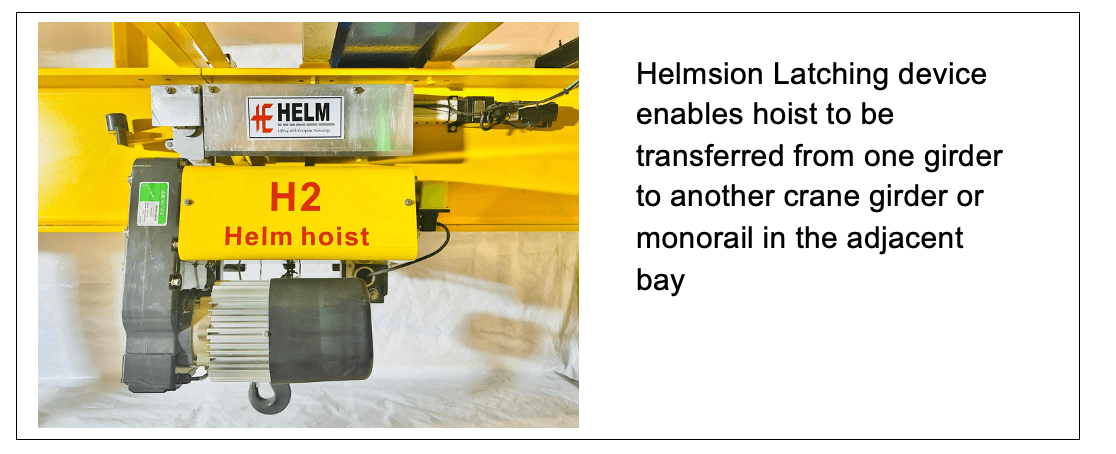
The Helmsion Advantage (Unique Latching System): For advanced factory workflows, Helmsion Engineering designs specialised Latching Systems. This proprietary technology allows a hoist carrying a heavy load to transition directly from one crane girder onto an adjacent bay’s crane or an intersecting monorail beam without lowering the load, drastically reducing cycle times and boosting production throughput.
2. Technical Specification Guide: Classifying Your Crane
Choosing the right crane requires exact knowledge of your operating conditions and material handling demands. Use the data-driven calculation steps below to match your workflow requirements to international engineering standards (FEM / DIN 15020).
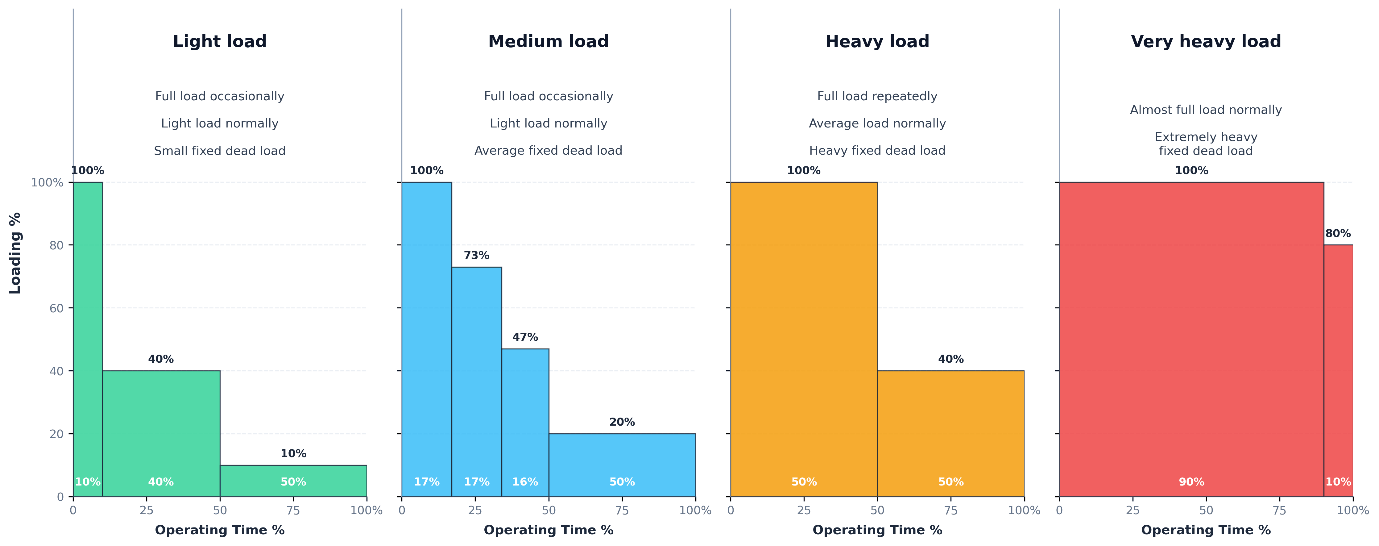
Step A: Evaluate Your Load Spectrum
- Light: Safely handles full design loads occasionally, but regularly operates under light, small fixed loads.
- Medium: Carries full design loads occasionally, but normally handles average fixed loads.
- Heavy: Repeatedly lifts full design loads, regularly operating under heavy fixed load conditions.
- Very Heavy: Frequently handles materials near or at its maximum Safe Working Load (SWL).
Step B: Calculate Average Daily Operating Time
Calculate your daily operating time using the following engineering formula. Note that operating time only accumulates while a load is actively being raised or lowered:

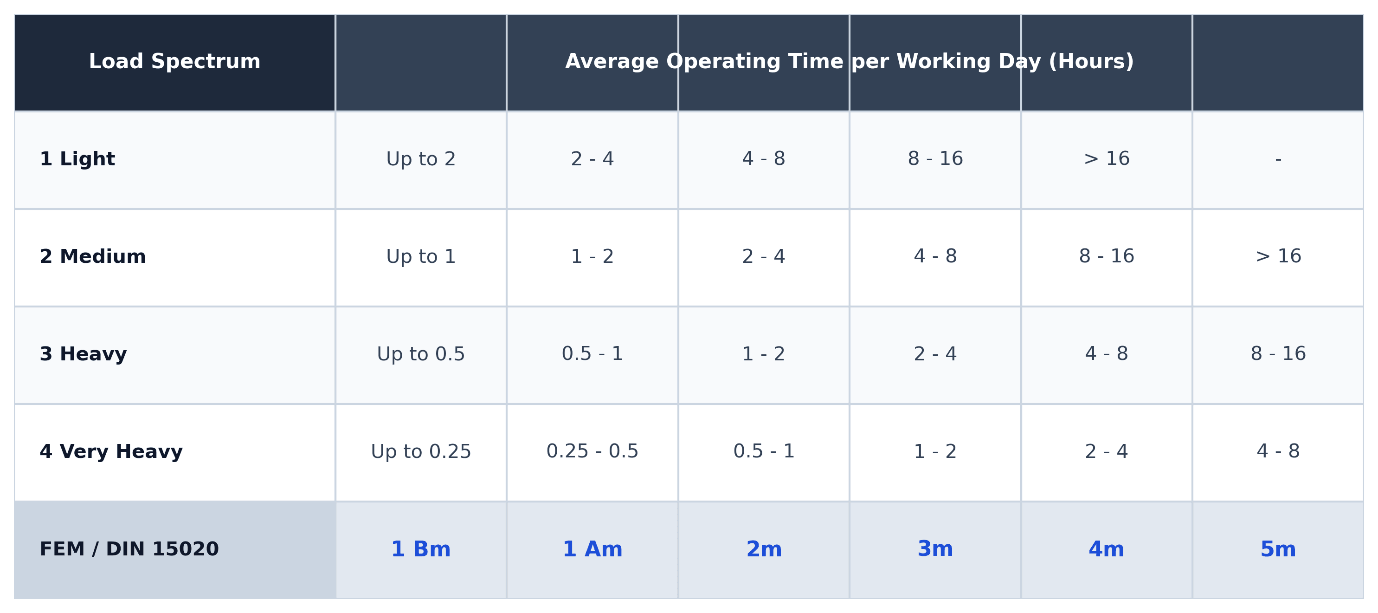
Step C: Identify the FEM / DIN 15020 Classification
Cross-reference your Load Spectrum (Step A) and Daily Operating Time (Step B) using the table below to discover your required industrial hoist classification:
3. Selecting the Right Lifting Mechanisms
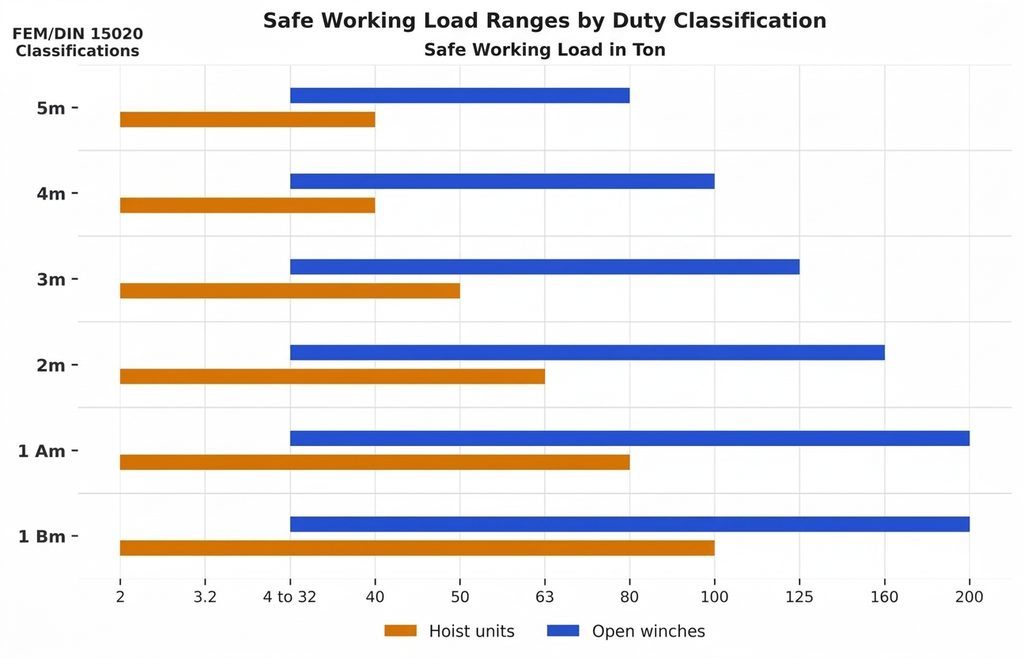
Once your crane classification is determined, select the appropriate lifting mechanism based on your target weight capacity:
- Standard Serial Hoist Units (Up to 80 Tonnes SWL): Available as high-performance electric chain hoists or heavy-duty wire rope hoists. For extended lifting heights or custom hooks, two independent hoist units can be engineered to synchronise with a common hook block.
- Heavy-Duty Open Winches (Up to 200 Tonnes SWL): Built for optimum adaptation to fulfil extreme weight requirements or harsh operating conditions that standard serial hoists cannot satisfy.
4. Travel Speeds & Crane Control Systems
Your crane’s horizontal travel speed must align with your facility’s choice of control mechanism to ensure operator safety and fluid material positioning. To achieve the required cycle time for the lifting operation, the appropriate working travel speeds have to be considered in the calculation. It is the average speed resulting from individual cycle movements which is decisive for the handling rates that can be obtained.
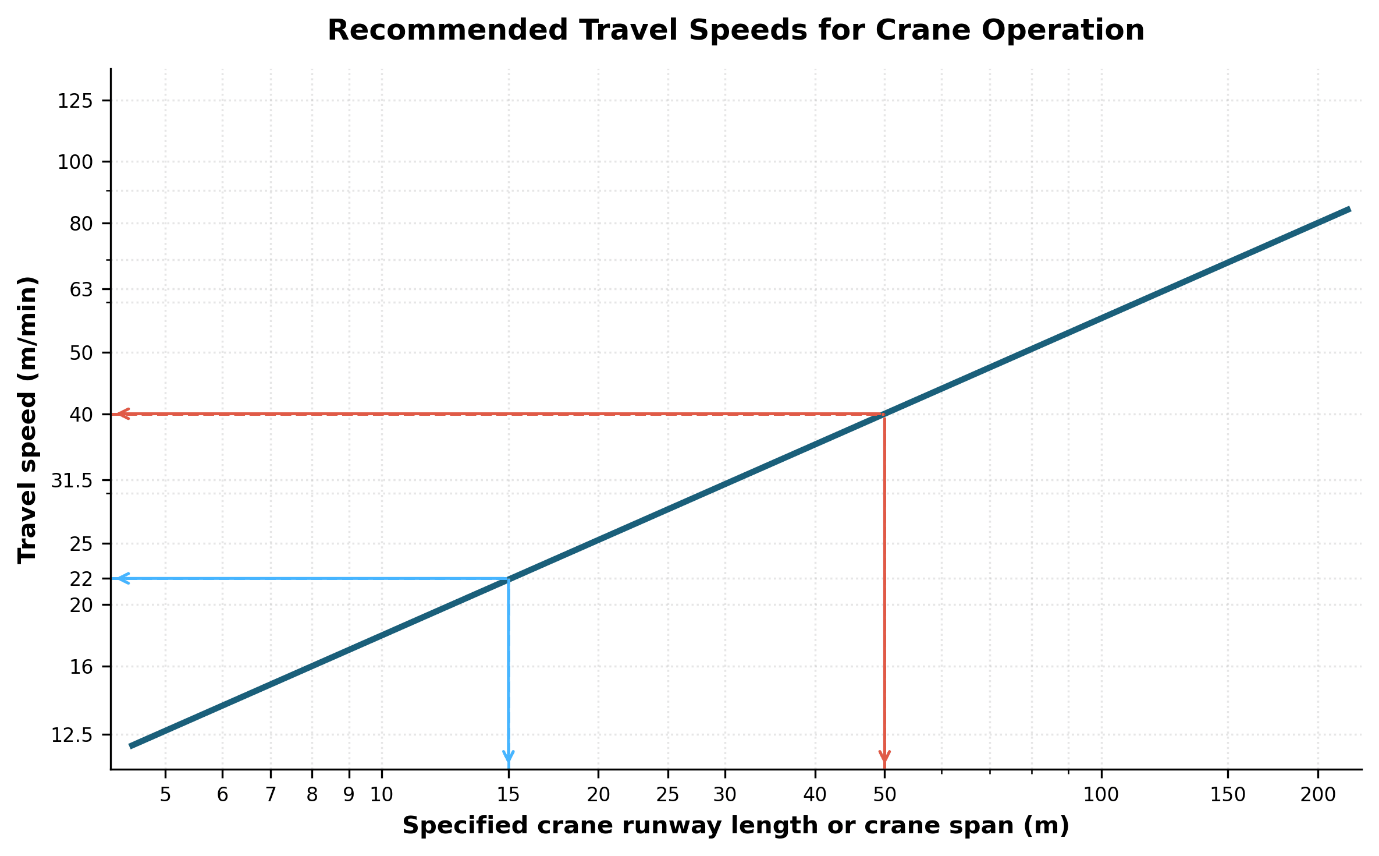
The final travel speeds must be in a well-balanced relation to the corresponding acceleration and deceleration characteristics. The control mode of the crane is crucial in selecting the travel speed.
What Mode of Control?
The crane’s control mode is an important factor when selecting the appropriate travelling speed. When the crane is operated using a suspended push-button pendant, the travelling speed should allow the operator to move alongside the crane safely and comfortably. Excessive speed may force the operator to run alongside the moving crane, creating a potential safety hazard. Therefore, for cranes operated via a suspended push-button pendant, the travelling speed should be limited to 40 m/min or lower.
| Control Arrangement | Picture | Description |
|---|---|---|
| 1. Floor Control Modes | ||
| Control pendant mobile along crane bridge | 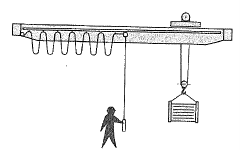 | Allows the operator to control the crane from a safe distance from the load or move closer to guide it. If obstacles are in the load’s travel path, the operator can move around them.Travel speeds up to 63 m/min* |
| Control pendant suspended from crab or hoist | 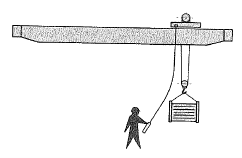 | The operator stays near the load and can guide it manually. Suitable for positioning loads in manufacturing, repair and maintenance. Large loads may obstruct the operator.Travel speeds up to 63 m/min* |
| Control pendant suspended from crane and fixed on the crane | 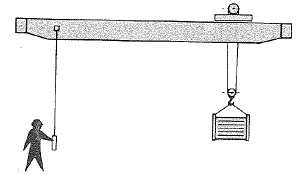 | Can be used when direct load guiding is not necessary or possible. Normally limited to cranes with a short span.Travel speeds up to 63 m/min* |
| Remote radio control | 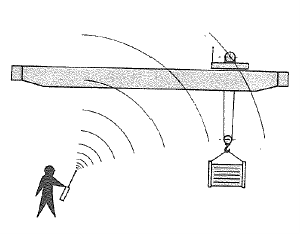 | Gives the operator freedom to control the crane from any position while maintaining sight of the moving load. Advantageous in hazardous environments, such as nuclear plants, refuse incinerators and sewage treatment plants. |
| 2. Cabin Control Modes | ||
| Cabin fixed at one end of crane bridge (open or closed) | 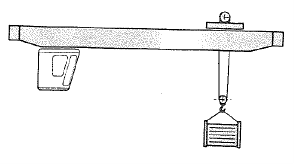 | Recommended when the crane must travel above 63 m/min. Provides a better view of the load path and protection from heat, dust, fumes and bad weather.For crane travel above 63 m/min |
| Cabin fixed at the centre of crane bridge (open or closed) | 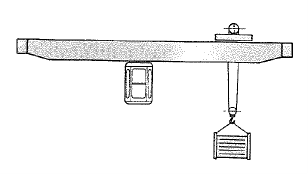 | Offers similar advantages to a cabin fixed at one end. Normally selected for large spans to provide better visibility across the crane bay. |
| Cabin fixed on crab and travelling with it (open or closed) | 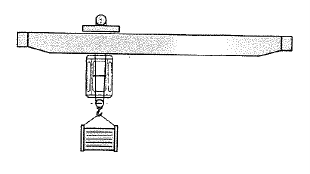 | Recommended for large-span cranes where the load must remain closely in view. Common when handling long loads and carrying out assembly work with large, heavy loads. |
| Cabin moving independently along crane bridge (open or closed) | 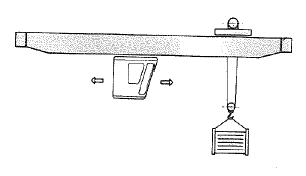 | Allows the operator to move closer to or farther from the load while maintaining good visibility. Beneficial when handling bulky goods. |